“Anything worth doing is worth doing right.” Hunter S. Thompson
It’s back-to-school time, truly one of my favorite seasons of the year. At 60, I still yearn to purchase a new notebook, sharpen a #2 pencil, and sit in the front row of a classroom like a nerdy sponge, ready to absorb. We live in a college town, and my children poke fun at my desire to enroll in classes, jokingly reminding me that new technologies have left me in the academic dust: Excel spreadsheets, Power Point presentations, and ChatGPT to name a few. They’re right, I’m clueless with all of it.
Fortunately, there are plenty of online opportunities to fuel my desire to learn, without papers, exams, presentations, or grades. I’m currently enrolled in a course with Louise Fletcher called Find Your Joy. It’s about painting yes, but, far more than that, it delves deeply into the creative mindset. She encourages a playful, curiosity-led approach to finding joy in your art making process that will lead you, eventually, to “success,” to work that is not results-driven and formulaic but uniquely you, a true expression of yourself.
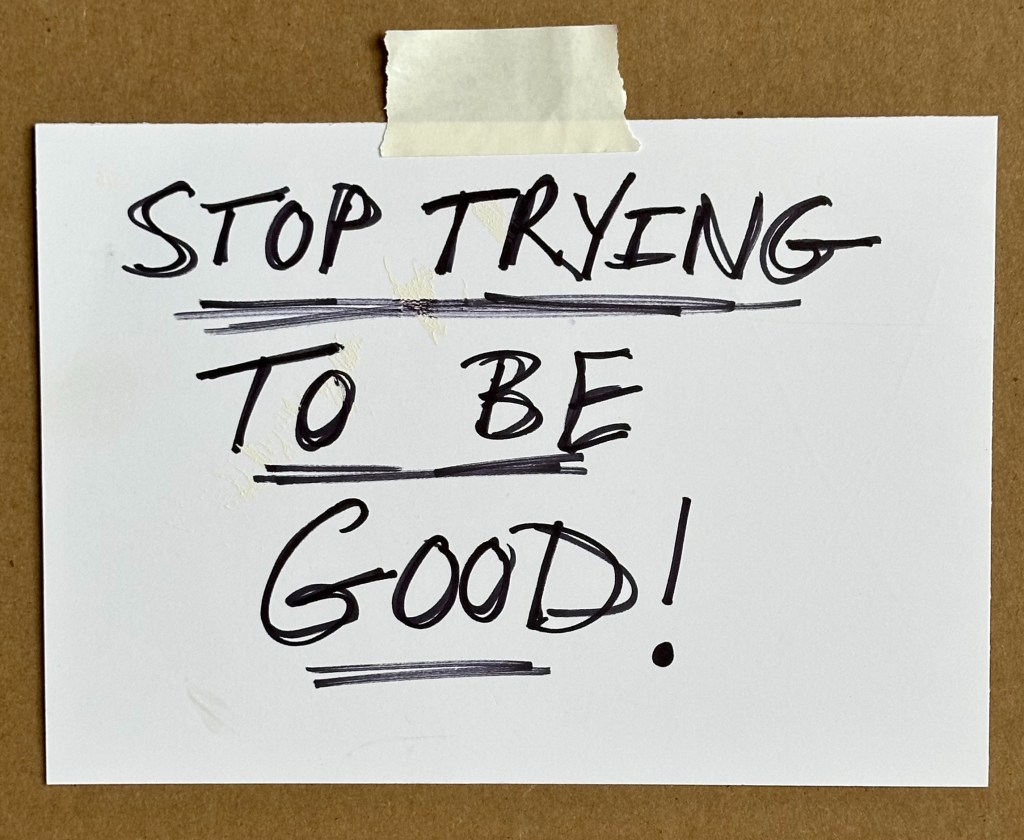
While listening to one of the course’s Q&A calls, I had a “hallelujah” moment when a participant wisely commented, “remember that old saying, ‘anything worth doing is worth doing right,’ well that’s just not true!” What?!? Isn’t that what we’ve (I’ve) always been taught? Isn’t that what the incessant, nagging, bossy voice inside my head has been telling me since I could first process language? That simple statement, innocently uttered in a Zoom call, challenged one of the many deeply embedded “wisdoms” I’ve considered stone tablet-engraved gospel for 55 years. What if that “truth” I’ve been clinging to all this time is anything but true? What if, “anything worth doing is worth doing.” Period. Who says it must be right? Or good?
I Googled the origins of this adage only to find, not surprisingly, many people have challenged its veracity. The OG version is attributed to a British Earl in a letter he wrote to his son in 1746. It reads like proper, Puritan-based dogma to me. The modern quote (above) was adapted to its current form by writer Hunter S. Thompson. My quick search also uncovered a few interesting iterations of this time-worn saying, all substituting alternatives for the last word, “right.” “Overdoing” was mentioned (“anything worth doing is worth overdoing”), emphasizing the need for commitment and passion, appropriate for the super-sized, over-zealous, multi-tasking, hustle culture of today. I was surprised to find another variation offering the word “poorly,” (“anything worth doing is worth doing poorly.”) Rather than focusing on success as the only acceptable outcome, this adaptation wrestles with the creativity killer perfectionism, or “right,” and, instead, encourages us to embrace “good enough” or even, heaven forbid, “bad.” I couldn’t agree more! One last substitution I noted was “slowly,” (“anything worth doing is worth doing slowly.” ) Remember the old TV commercial featuring the Slowkys, those delightfully languid turtles who were still happily using dial-up internet rather than Comcast’s high-speed offering at the time? I was and still am a Slowsky, thus the tech advances leaving me in the dust! With all these options suggested for a final word in this age-old missive, I propose it needs no last word at all and should simply read, “anything worth doing is worth doing,” with no qualifying adverbs attached.
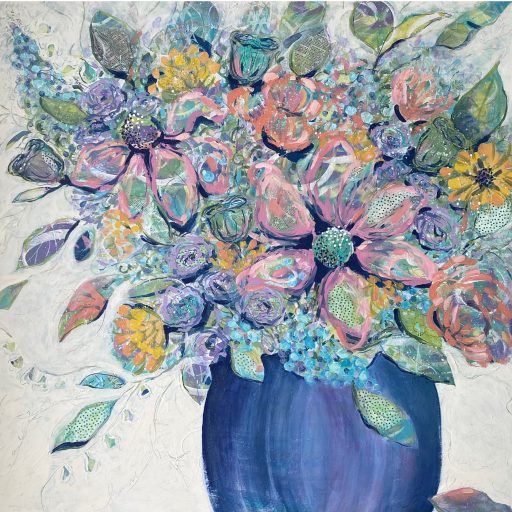
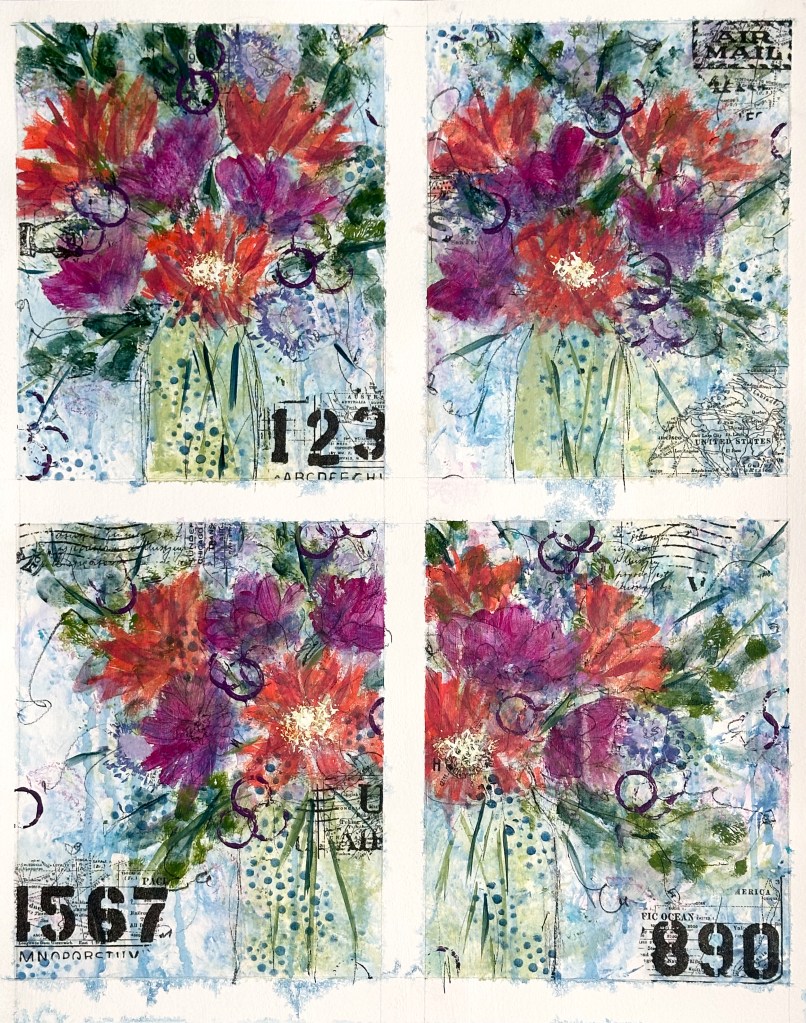
I spend (? waste in some people’s eyes) a LOT of time making a LOT of bad paintings on my way to making an occasional good or “right” one. Does that mean I shouldn’t paint? Of course not! For me, the process of painting, whether the product is “right” and good or “wrong” and rubbish, brings me incredible joy. It’s definitely worth doing!
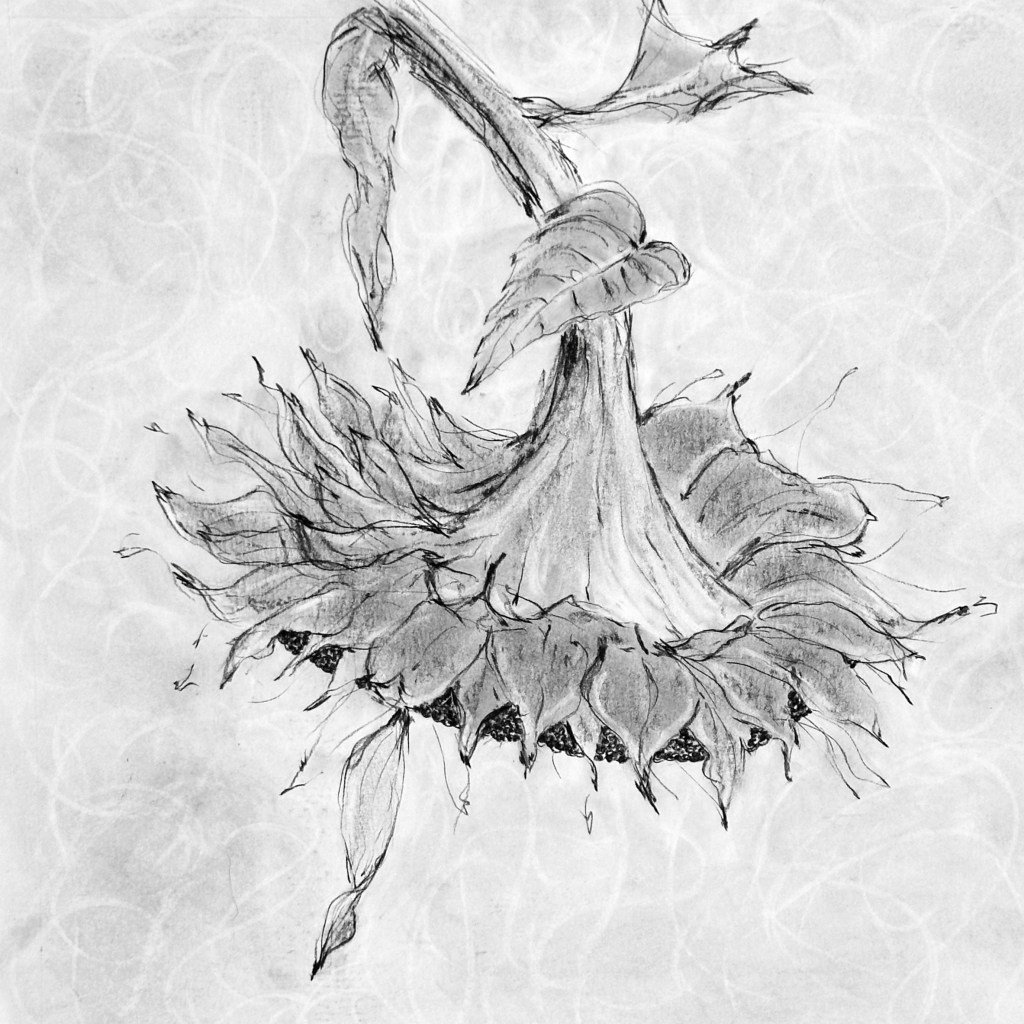
Therefore, in this back-to-school season, I’m focusing less on learning and more on unlearning. I’m challenging this saying and many more untruths deeply entrenched in my core beliefs. My pencil is sharpened; my pristine, new notebook is open, ready to record my journaling attempts at untangling the years and years of “good girl” knots I’ve tied myself into; I’m in the front row of the circuit board of my psyche, not like a sponge, more like an electrician, ready to short circuit some hard-wired hogwash I’ve been holding onto for far too long. Like the fading sunflower I drew in charcoal above, “Holding On or Letting Go?”, it’s time to jettison this and a few other limiting beliefs to my brain’s memory dump. It’s time to let go.
 Melissa Stephens Art
Leave a comment